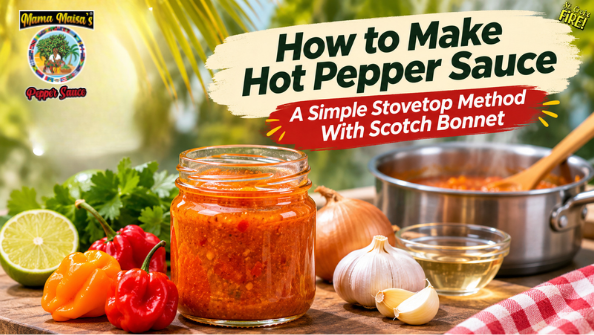
A handful of fresh peppers, a few garlic cloves, some vinegar, and a saucepan are all it takes to make a bold condiment in your own kitchen. Once you’ve made a batch, a store-bought bottle never quite feels the same.
Here’s how to make hot pepper sauce on the stovetop: simmer chopped peppers, garlic, onion, vinegar, and lime juice until soft, then blend until smooth, adjust the thickness, and refrigerate in a clean jar. The whole process takes about 30 minutes, with no fermenting required.
Making homemade hot pepper sauce gives you control over heat, thickness, flavor, and ingredients. This guide walks through an easy hot pepper sauce recipe built around Scotch bonnet peppers, with tips for fixing texture and taming the burn.
How to Make Hot Pepper Sauce at Home
Here is the short version:
- Prepare the peppers. Wash, wear gloves, and trim the stems.
- Cook the ingredients. Simmer peppers, garlic, onion, and vinegar until soft.
- Blend until smooth. Let the mixture cool slightly, then purée in batches.
- Adjust consistency. Thin with a splash of water or simmer longer to thicken.
- Cool and store safely. Pour into a clean container and refrigerate.
The steps are simple, but the details are what separate a harsh, watery sauce from a balanced one. We’ll cover each step below.
What Ingredients Do You Need for Homemade Hot Pepper Sauce?
Good pepper sauce ingredients are inexpensive and easy to find. This is an original educational recipe inspired by Caribbean flavor traditions. It is not a copycat of any commercial product, including Mama Maisa’s.
For about 1½ cups of sauce:
- 4–6 Scotch bonnet peppers (use fewer for milder sauce)
- 1–2 milder peppers, such as red bell pepper, for body and sweetness
- 4 garlic cloves
- ½ medium onion, roughly chopped
- ¾ cup white or apple cider vinegar
- 2 tablespoons fresh lime juice
- ½ teaspoon salt, adjusted to taste
- ¼ to ½ cup water, as needed
- Optional: a pinch of curry powder, ½ teaspoon yellow mustard, or a few allspice berries
What each ingredient does:
- Scotch bonnets supply fruity flavor and serious heat.
- Milder peppers add volume and soften the burn.
- Garlic and onion build savory depth.
- Vinegar adds tang and gives the sauce a bright, sharp backbone.
- Lime juice adds freshness that lifts the pepper’s fruitiness.
- Salt rounds out the other flavors.
Easy Hot Pepper Sauce Recipe: Step-by-Step Stovetop Method
Step 1: Prepare the Peppers
Wash the peppers and pat them dry. Put on disposable gloves before you cut anything. Scotch bonnet oils cling to skin and can burn for hours, especially if you touch your eyes or face.
Remove the stems and roughly chop the peppers. For a milder sauce, cut away some of the white inner membranes and seeds. Removing them reduces some of the perceived heat, but the flesh itself is still very hot.
Work in a ventilated kitchen. Sautéing hot peppers can send spicy vapors into the air, so turn on your vent fan or open a window.
Step 2: Cook the Ingredients
Add the peppers, garlic, onion, and vinegar to a small saucepan with ¼ cup of water. Bring to a gentle simmer over medium-low heat. Cover and cook for 10 to 15 minutes, stirring occasionally.
Gentle cooking softens the vegetables, mellows the raw sharpness of the garlic and onion, and blends the flavors. Softened ingredients are also much easier to purée.
Keep the heat low. A hard boil can scorch the bottom of the pan and reduce the liquid too fast.
Step 3: Blend Into a Smooth Sauce
Take the pan off the heat and let it cool for several minutes. Hot liquid in a sealed blender can build pressure and splatter, so don’t fill the jar more than halfway. Vent the lid and cover it with a towel.
Start on low speed and work up gradually. Blend for 45 to 60 seconds, until the mixture looks silky. Add the lime juice at the end so the flavor stays bright.
If you want a smooth hot sauce, blend longer and strain through a fine mesh sieve. If you prefer a chunky pepper sauce, pulse a few times and stop while some texture remains.
Step 4: Adjust Flavor and Consistency
Taste with a clean spoon, using a tiny amount first. This is where you balance the sauce:
- Too hot? Add a splash of water, a little more onion, or a milder pepper and blend again.
- Too sharp? Add a pinch more salt or a little water to soften the vinegar.
- Flat? Add a squeeze of lime or a tiny bit of mustard.
- Too thin? Simmer it for a few more minutes, stirring often.
Keep notes on what you changed. Your next batch will improve quickly.
Step 5: Cool and Store Safely
Let the sauce cool, then pour it into a clean, sterilized jar or bottle. Refrigerate it promptly.
Homemade sauce doesn’t contain commercial preservatives, so treat it like any fresh kitchen preparation. Many home cooks use a refrigerated batch within a week or two, but there is no guaranteed shelf life. Always use clean utensils.
If the sauce develops mold, an off smell, bubbling, or an unusual appearance, throw it out. When in doubt, discard it. And don’t attempt to can or shelf-store the sauce without following tested guidance from a recognized food safety authority.
How to Make Hot Pepper Sauce Without Fermenting
You can make a delicious sauce without fermenting at all. The stovetop method above is a cooked, non-fermented approach. You simmer the ingredients, blend them, and refrigerate.
Fermented hot sauce, by contrast, relies on a controlled, time-based process in which peppers and salt are left to develop tangy complexity before blending. Many people love that flavor, but it requires patience and careful technique.
A stovetop method can be useful when you want a faster result, a fresh cooked flavor, or an easier first project. Neither approach is universally better. They simply create different results.
How to Make Hot Pepper Sauce With Scotch Bonnet Peppers
Scotch bonnets are one of the signature peppers of Caribbean cooking. They look like small, wrinkled lanterns in shades of green, yellow, orange, and red. What sets them apart is flavor as much as heat. They carry fruity, almost tropical notes along with a bright, floral aroma.
They are also very hot. Many cooks use them sparingly, or pair them with milder peppers, so the fruitiness comes through instead of just the burn.
That’s why the recipe above blends Scotch bonnets with a milder pepper, onion, and garlic. Those ingredients dilute the intensity while keeping the character. Lime juice and a pinch of curry spice or mustard push the sauce further toward island-inspired flavors.
Scotch bonnet sauce pairs especially well with grilled chicken, shrimp, rice and beans, roasted sweet potatoes, and plant-based dishes.
What Is Scotch Bonnet Pepper Mash?
A scotch bonnet pepper mash is a coarse purée of fresh peppers, usually blended with salt and sometimes a bit of vinegar. It is a base ingredient, not a finished hot sauce.
Makers often use mash as a starting point. They may age it, strain it, or blend it with other ingredients to build a final sauce. A finished sauce typically adds vinegar, aromatics, seasonings, and adjustments for texture and balance.
Because mash preparation involves salt levels, acidity, and storage conditions that affect safety, this guide doesn’t provide preservation instructions. If you’re interested in making and storing mash for long periods, consult tested food safety guidance first. For everyday cooking, the stovetop recipe above is the simpler route.
What Is the Difference Between Fermented and Stovetop Hot Sauce?
| Feature | Fermented Hot Sauce | Stovetop Hot Sauce |
|---|---|---|
| Preparation time | Longer | Generally faster |
| Flavor development | Fermented complexity | Fresh cooked flavor |
| Main process | Controlled fermentation | Cooking and blending |
| Beginner convenience | Requires careful process control | Easier for quick recipes |
| Texture | Varies | Easy to adjust |
Both styles can be excellent. Choose fermentation if you enjoy a long project and a tangier, more layered profile. Choose the stovetop route if you want a quick, flexible sauce you can tweak as you go.
How to Make Hot Pepper Sauce Thicker
If your sauce comes out thinner than you’d like, you have several easy fixes:
- Use less added liquid. Start with the smaller amount of water and add more only if the blender needs it.
- Simmer gently. Cook the blended sauce for 5 to 10 minutes, uncovered, to evaporate excess water. Stir often.
- Add naturally thicker ingredients. A little more onion, roasted red pepper, or carrot adds body.
- Blend thoroughly. A longer blend breaks down fibers and makes the texture feel thicker and more cohesive.
Remember that sauce thickens slightly as it cools, so judge the texture after it has rested. Don’t use unsafe additives to thicken it. Stick with real food ingredients and good technique.
How Do You Control the Heat in Homemade Hot Pepper Sauce?
Heat control is the main skill in pepper sauce. Try these approaches:
- Use fewer Scotch bonnets. Start with two or three, then increase next time.
- Add milder peppers. Red bell pepper, sweet peppers, or mild chilies increase volume without increasing burn.
- Increase the other ingredients. More onion, garlic, or a bit of carrot dilutes the heat.
- Serve smaller amounts. A few drops go a long way.
Removing seeds and membranes may reduce some perceived heat, but it won’t eliminate the pepper’s spiciness. If you’ve already made the sauce and it’s too fierce, blend in a milder pepper and a splash of water, or stir a spoonful into rice, yogurt, or a dressing to cool it down.
Always handle the peppers with gloves, wash your hands and cutting board thoroughly afterward, and keep your fingers away from your face.
What Does Homemade Scotch Bonnet Hot Sauce Taste Like?
Imagine the first bite of a ripe mango, then a sudden wave of warmth. That’s the Scotch bonnet experience. The fruity, almost floral aroma arrives first, followed by clean, bright heat that builds across your tongue.
Vinegar adds a lively tang, garlic gives savory depth, and lime lifts everything with citrus. If you add curry spice or a little mustard, you’ll notice a warm, earthy undertone that feels distinctly Caribbean.
A well-balanced sauce doesn’t just burn. It makes food taste more vivid, and that balance of heat and flavor is what separates a great sauce from a merely hot one.
How Is Caribbean Pepper Sauce Different From Other Hot Sauces?
Hot sauces vary widely by region:
- Louisiana-style sauces are typically thin and vinegar-forward, built on cayenne-type peppers.
- Cayenne sauces lean on straightforward, sharp heat.
- Mexican-style sauces often feature dried chilies, smoky notes, or tomatillo and lime.
- Caribbean pepper sauces often center on Scotch bonnets and may include mustard, garlic, onion, citrus, and curry-style spices.
Not every Caribbean sauce uses the same ingredients. Recipes vary by island, family, and cook. In general, though, the fruitiness of Scotch bonnets and the layering of aromatics create a style that’s distinct from the other categories.
Caribbean-American food culture has long been part of cities like New York and Miami, and Scotch bonnet sauces are a familiar sight in Caribbean markets and restaurants there. You’ll find them wherever the cuisine has put down roots.
From Homemade Sauce to Ready-to-Use Caribbean Flavor
Making sauce at home is rewarding. But some days you want bold island flavor without the chopping, simmering, and cleanup. Some cooks also prefer the consistency of a ready-made bottle.
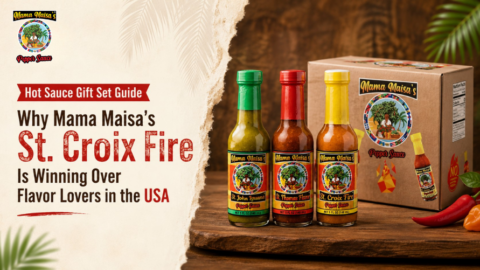
That’s where Scotch bonnet pepper sauce from Mama Maisa’s comes in. Their featured product, Mama Maisa’s St. Croix Fire Scotch Bonnet Pepper Sauce, is a Caribbean-inspired sauce made with Scotch bonnet peppers, curry, garlic, lime, tangy mustard, onion, and island-inspired spices. The result is heat with layered depth rather than one-dimensional spiciness.
Based on the product information supplied, it is a vegan, gluten-free recipe, and labeled as no sugar, low sodium, and non-GMO. As always, check the label on your bottle for the most current details. The sauce was created in St. Croix and is meant for everyday cooking.
It’s an original product, not a version of the homemade recipe above. Think of the two as complementary: one for the joy of making, the other for the convenience of reaching for a bottle.
What Foods Can You Use Hot Pepper Sauce On?
Good pepper sauce earns its place on far more than wings. Try these everyday ideas:
Grilled chicken. Brush a small amount onto chicken in the last few minutes of grilling, or serve it as a finishing sauce.
Seafood. Spoon it over grilled shrimp, fish, or seafood bowls.
Roasted vegetables. Add a few drops to roasted cauliflower, sweet potatoes, or Brussels sprouts.
Rice bowls. Stir sauce into rice, beans, vegetables, and grilled protein.
Sandwiches and wraps. Use it as a spread, or mix a little into mayo or yogurt.
Plant-based meals. Add bold flavor to vegan tacos, grain bowls, and plant-based burgers. Vegan hot sauce options make this especially easy, since the sauce fits right into plant-based cooking.
A good rule: start with a few drops, taste, and add more.
How to Choose the Right Hot Pepper Sauce
With so many bottles on the shelf, a quick checklist helps:
| What to Consider | What to Look For |
|---|---|
| Heat level | Pepper type and your spice tolerance |
| Flavor | Tangy, fruity, smoky, savory, or curry-inspired |
| Ingredients | Peppers, spices, garlic, citrus, vinegar |
| Dietary preferences | Vegan or gluten-free options when needed |
| Sodium | Compare nutrition labels |
| Versatility | Foods you plan to use it with |
| Texture | Smooth or chunky preference |
Hot sauce brands differ a lot in how they balance these factors, so reading the label is worthwhile. If you’re comparing sauces for daily use, look for one that matches both your flavor preferences and the way you cook.
Popular hot sauce styles often come in bundles, which can be a nice way to compare flavors side by side.
Many shoppers also search for Organic hot sauce when they want a short, simple ingredient list. To be clear, Mama Maisa’s doesn’t claim organic certification. What the sauce offers is Caribbean flavor, a plant-based recipe, and an ingredient list you can read for yourself on the label. The 2-pack is a handy way to try it.
Explore Mama Maisa’s Caribbean-Inspired Hot Sauce Options
Once you find a sauce you like, it makes sense to keep a few bottles on hand. Here are some ways to shop:
- Individual bottles and 2-packs are good for trying a flavor.
- Multipacks suit households that use hot sauce daily. For example, the Best hot sauces conversation often comes down to value, and a 3-pack lets you share a bottle or keep one in the pantry.
- Bundles are ideal for fans who like a little extra. The Spicy sauce bundle pairs the 3-pack with an apron and T-shirt.
- Larger packs help heavy users. If sodium is a priority, the Low sodium hot sauce 6-pack makes it easy to stock up on a lower-sodium option, per the product’s labeling.
- Gifts are easy for the hot sauce lover in your life. A Hot sauce gift set like the 12-pack case works for holidays, housewarmings, and cookouts.
Restaurants, specialty retailers, and Caribbean grocers can also explore Wholesale Hot Sauce options directly from Mama Maisa’s. Check the site for current availability and details.
FAQs
How do you make hot pepper sauce at home?
Simmer chopped peppers, garlic, onion, and vinegar until soft. Cool slightly, blend until smooth, add lime juice, adjust the flavor and thickness, and refrigerate in a clean container.
How do you make hot pepper sauce without fermenting?
Use a stovetop method. Cook the peppers and aromatics in vinegar, blend, and refrigerate. No fermentation time is needed, so the process takes about 30 minutes.
Can you make hot pepper sauce with Scotch bonnet peppers?
Yes. Scotch bonnets are a classic choice for Caribbean-style sauces. Because they’re very hot, many cooks combine them with milder peppers and extra onion or garlic.
How do you make hot pepper sauce thicker?
Use less liquid, simmer the blended sauce gently to reduce excess water, add naturally thicker ingredients like onion or roasted pepper, and blend thoroughly. The sauce will also thicken slightly as it cools.
Is Scotch bonnet hotter than jalapeño?
Yes. Scotch bonnets are generally far hotter than jalapeños. Jalapeños are usually considered mild to medium, while Scotch bonnets rank among the hotter common cooking peppers.
What is the difference between fermented and stovetop hot sauce?
Fermented sauce relies on a controlled process over time to develop tangy complexity. Stovetop sauce is cooked and blended, giving a fresher flavor with a faster, simpler process.
What foods go well with Scotch bonnet pepper sauce?
Grilled chicken, shrimp, fish, rice bowls, roasted vegetables, sandwiches, and plant-based dishes all pair nicely. Start with a few drops and add more to taste.
Is Mama Maisa’s St. Croix Fire a vegan hot sauce?
Yes, based on the supplied product information, it is a vegan, plant-based recipe. Check the product label for the most current details.
Final Thoughts: Bring Bold Caribbean Heat to Your Kitchen
Learning how to make hot pepper sauce is easier than most people expect. A simple stovetop method gives you a fast, non-fermented sauce with plenty of room to adjust the heat, the thickness, and the flavor.
Scotch bonnet peppers bring fruity brightness and serious heat, and a little balance from garlic, onion, vinegar, and lime turns that heat into something delicious. Cook it once, take notes, and tweak it until it’s yours.
And on the days you’d rather skip the chopping and simmering, Mama Maisa’s St. Croix Fire offers bold Scotch bonnet flavor with curry-style warmth, tangy mustard, garlic, and lime, all in a ready-to-use bottle. Try it on your next grilled dinner and taste the island-inspired difference.
👉 Mama Maisa’s Contact: Hot pepper sauce

- Hot Sauce Heat Scale: How Hot Is Hot Sauce, From Mild to Scotch Bonnet and Beyond - November 17, 2026
- How to Make Hot Pepper Sauce: A Simple Stovetop Method With Scotch Bonnet - November 13, 2026
- American Hot Sauces: Regional Styles vs Caribbean Heat - November 11, 2026