There is a big difference between a hot sauce that simply makes a dish hotter and one that makes you want to take another bite.
Scotch bonnet pepper hot sauce belongs firmly in the second category. Scotch bonnet peppers are known for serious heat, but their appeal is not limited to spice. They bring a distinctive fruity, aromatic character that fits naturally with Caribbean-inspired combinations of mustard, garlic, lime, onion, and warming spices.
That combination makes Scotch bonnet sauce especially interesting for cooks who want more than a vinegar-forward blast of heat. A good sauce can become a finishing condiment for seafood, a marinade ingredient for grilled chicken, a bright addition to vegetables, or a way to wake up a rice and bean bowl.
For shoppers exploring a Scotch bonnet pepper sauce, the important question is not simply, “How hot is it?” It is also, “What does it taste like, and how will I actually use it?”
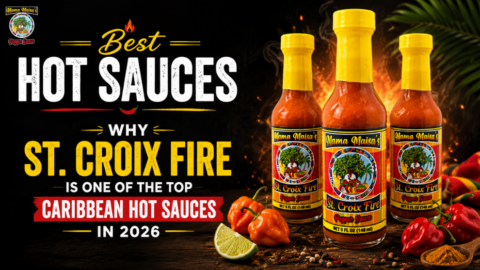
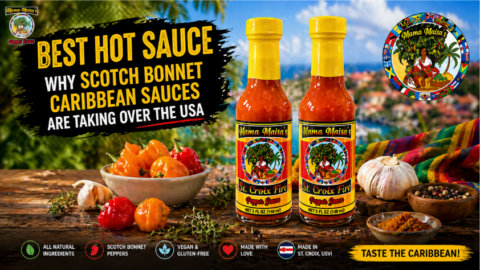
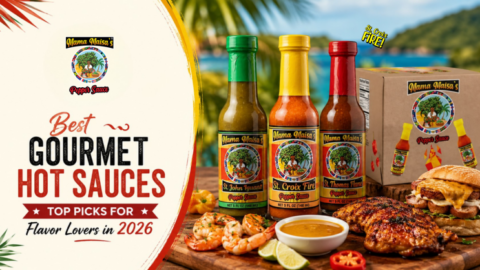
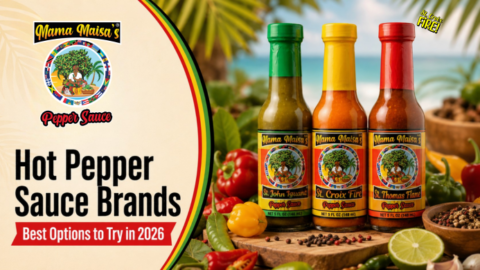
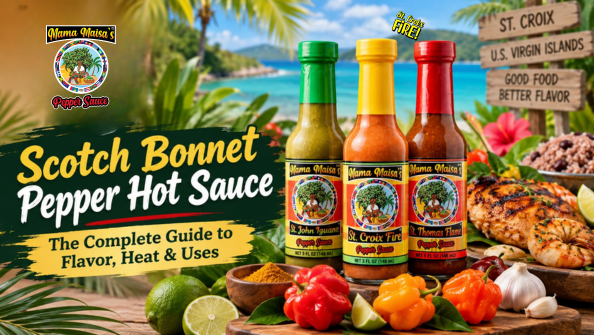
Mama Maisa’s St. Croix Fire offers one example of this flavor-first approach, combining Scotch bonnet peppers with curry, mustard, garlic, lime, onion, and island-inspired spices.
What Is Scotch Bonnet Pepper Hot Sauce?
Scotch bonnet pepper hot sauce is a spicy condiment made with Scotch bonnet peppers, usually balanced with ingredients such as acid, aromatics, spices, and other flavoring components. Its defining characteristic is the combination of significant pepper heat with a fruity, aromatic flavor associated with Caribbean-inspired cooking.
The Scotch bonnet is a chili pepper particularly associated with Caribbean cooking. Its flavor is often described as fruity and tropical rather than simply sharp or aggressively hot.
In a finished sauce, the pepper is only one part of the equation. The recipe determines how the heat is presented. Acidity can add brightness, aromatics can create depth, and spices can make the sauce feel warmer and more complex.
That is why two bottles made with the same pepper can taste remarkably different.
A pepper-forward sauce may emphasize the Scotch bonnet itself. Another might build around mustard, garlic, curry, lime, onion, or other spices. The result can range from bright and tangy to rich and savory while retaining the signature character of the pepper.
What Does Scotch Bonnet Pepper Hot Sauce Taste Like?
Scotch bonnet pepper sauce is typically prized for a fruity, aromatic pepper character combined with noticeable heat. Depending on the recipe, it can also taste bright, tangy, savory, warm, garlicky, mustardy, or spice-forward.
The flavor is what separates a memorable Scotch bonnet hot sauce from a condiment that only delivers heat.
Common flavor characteristics include:
- Fruity: Scotch bonnet peppers have a distinctive fruit-like character.
- Tropical: The flavor fits naturally with Caribbean-inspired ingredients.
- Bright: Acidic ingredients such as lime can sharpen the overall profile.
- Aromatic: Garlic, onion, and spices add dimension.
- Pepper-forward: The chili remains an important part of the sauce’s identity.
- Tangy: Mustard and citrus can create a lively contrast.
- Warm: Curry-style spices can add depth without relying solely on chili heat.
This makes Scotch bonnet sauce particularly useful with foods that can carry strong flavors.
It works naturally with seafood, grilled meats, roasted vegetables, rice, beans, sandwiches, marinades, and plant-based dishes. The fruity pepper character can also provide an interesting contrast to savory or rich foods.
How Hot Is Scotch Bonnet Pepper Sauce?
Scotch bonnet peppers are hot chili peppers, commonly cited in the tens of thousands to low hundreds of thousands of Scoville Heat Units (SHU), but a finished Scotch bonnet sauce may be substantially different in heat because its recipe, pepper concentration, acidity, and other ingredients affect the final intensity.
That distinction matters.
A raw pepper and a bottled sauce should not automatically be treated as having the same Scoville rating. A sauce can contain Scotch bonnet peppers while also containing ingredients that change how concentrated the pepper heat is.
Factors affecting finished-sauce heat can include:
- Amount of Scotch bonnet used
- Pepper variety and individual pepper characteristics
- Recipe formulation
- Dilution from other ingredients
- Acidity
- Preparation method
- Other peppers or flavor ingredients
- Individual tolerance to chili heat
So if you see a Scoville number associated with Scotch bonnet peppers online, don’t automatically apply that number to every bottle of Scotch bonnet hot sauce.
For consumers, the more useful question is often how the sauce behaves on food: Does it provide a noticeable kick while leaving enough flavor to keep using it?
Scotch Bonnet Pepper Hot Sauce Scoville Rating Explained
The Scoville scale measures chili pepper heat in Scoville Heat Units, or SHU. It is commonly used to communicate the relative heat of peppers and pepper products.
Scotch bonnet peppers are generally considered a hot chili, with published heat ranges varying depending on the source, pepper, growing conditions, and measurement method.
Three points are especially important:
- SHU describes heat intensity, not flavor quality.
- The Scoville rating of a raw pepper does not automatically equal the rating of a finished sauce.
- Published pepper ranges can vary.
For a shopper comparing hot pepper sauce brands, a Scoville number can provide useful context, but it should not be the only selection criterion.
A sauce with a lower perceived heat can still be more interesting for everyday cooking if its flavor works across seafood, vegetables, grilled foods, sandwiches, and marinades.
Is Scotch Bonnet Pepper Hot Sauce Spicy?
Yes. Scotch bonnet pepper hot sauce is generally spicy because Scotch bonnet peppers are hot chili peppers. The actual intensity of a finished sauce depends on its formulation, so the experience can range from noticeable pepper heat to a more assertive chili kick.
Experienced hot-sauce consumers and chili enthusiasts may enjoy Scotch bonnet sauces for precisely that reason.
But Scotch bonnet sauce isn’t only for people who chase maximum heat. A flavorful sauce can be used in small amounts to add character without turning an entire meal into a test of endurance.
A practical approach is simple: start with a small amount, taste the food, and increase gradually.
That allows you to use the sauce as a flavoring ingredient rather than treating it only as a source of heat.
Scotch Bonnet vs Habanero: What’s the Difference?
The habanero vs Scotch bonnet comparison is useful because both peppers are known for significant heat and fruity characteristics. They overlap considerably, but their flavor profiles are not identical.
| Characteristic | Scotch Bonnet | Habanero |
|---|---|---|
| Heat | Hot | Hot |
| Flavor | Fruity, aromatic, tropical | Fruity, floral, aromatic |
| Aroma | Distinctive and pepper-forward | Often strongly aromatic |
| Caribbean association | Strong association with Caribbean cooking | Widely used in Caribbean and Latin American cooking |
| Typical uses | Pepper sauces, marinades, seafood, grilled foods | Hot sauces, salsas, marinades, spicy condiments |
| Sauce profile | Often bright, fruity, tangy, and spice-friendly | Often fruity, bright, and heat-forward |
| Ideal consumer | Cooks seeking Caribbean-inspired pepper character | Consumers seeking a versatile hot chili with substantial heat |
Neither pepper is universally “better.” The right choice depends on the flavor you want.
If Caribbean-inspired flavor is part of the goal, Scotch bonnet has a particularly useful culinary identity.
What Makes an Authentic Scotch Bonnet Sauce?
“Authentic” can mean different things depending on the recipe and culinary context, so it is better to focus on recognizable characteristics than to treat the word as a universal certification.
A Caribbean-inspired Scotch bonnet sauce commonly emphasizes combinations such as:
- Scotch bonnet peppers
- Bright acidity
- Mustard
- Garlic
- Onion
- Fruity pepper flavor
- Warming spices
- Balanced heat
The distinction is important. A generic spicy sauce that happens to contain Scotch bonnet is not necessarily designed around the pepper’s Caribbean culinary character.
A sauce built around Scotch bonnet, mustard, garlic, citrus, and warming spices tells a different flavor story.
That is part of what makes a Caribbean hot sauce interesting: the pepper is integrated into a broader flavor architecture.
Why Curry, Mustard, Garlic & Scotch Bonnet Work So Well Together
Some ingredients seem almost designed to meet each other.
In a curry mustard garlic sauce built around Scotch bonnet, each component has a role:
| Flavor Element | What It Contributes |
|---|---|
| Scotch bonnet | Fruity, distinctive pepper heat |
| Mustard | Tangy sharpness |
| Garlic | Savory aromatic depth |
| Lime | Bright acidity |
| Curry spices | Warm layered complexity |
| Onion | Savory sweetness |
| Island spices | Additional aromatic depth |
This is based on the supplied description of St. Croix Fire’s flavor profile.
The Scotch bonnet supplies the defining pepper character. Mustard contributes sharpness and tang. Garlic brings savory depth, while lime keeps the combination bright.
Curry-style spices add another layer. Rather than tasting like a simple pepper-and-vinegar sauce, the profile can move between heat, tang, aroma, and warmth.
That complexity is useful at the dinner table because it gives the cook multiple ways to use the sauce.
St. Croix Fire: A Caribbean-Inspired Scotch Bonnet Pepper Sauce
Mama Maisa’s St. Croix Fire Scotch Bonnet Pepper Sauce is positioned as a bold, Caribbean-inspired hot pepper blend built around Scotch bonnet peppers.
Its supplied flavor profile includes:
- Scotch bonnet peppers
- Aromatic curry
- Zesty garlic
- Lime
- Tangy mustard
- Onion
- Island-inspired spices
- A secret spice mix
- Balanced heat
- Gentle sweetness
The product is also positioned as vegan, sugar free, low sodium, gluten free, non-GMO, and made with all-natural ingredients. These are product attributes supplied for St. Croix Fire; they should not be interpreted as general health claims.
The appeal is primarily culinary.
The Scotch bonnet delivers the recognizable pepper character, while curry, mustard, garlic, lime, onion, and spices create layers around it. That makes the sauce suitable for more than simply adding heat to a finished plate.
It can be used with grilled foods, seafood, vegetables, rice bowls, sandwiches, marinades, and plant-based meals.
For shoppers interested in exploring the product, the Scotch bonnet pepper sauce collection provides a natural starting point.
How Is Scotch Bonnet Hot Sauce Different From Regular Hot Sauce?
“Regular hot sauce” covers a huge category, so the difference depends on the recipe. A Scotch bonnet sauce stands out when its pepper character and Caribbean-inspired ingredients play a central role.
| Characteristic | Scotch Bonnet Hot Sauce | General Hot Sauce |
|---|---|---|
| Pepper character | Fruity and distinctive | Depends on pepper used |
| Heat | Often noticeable to hot | Can range from mild to very hot |
| Flavor complexity | Can include tropical, mustard, garlic, citrus, and spice notes | Varies widely |
| Caribbean influence | Often central to the flavor concept | Not necessarily present |
| Acidity | Often balanced with citrus or vinegar-style acidity | Recipe dependent |
| Culinary versatility | Strong with seafood, grilled food, rice, vegetables, and plant-based meals | Depends on formulation |
| Ideal pairing | Foods that benefit from fruity pepper heat and layered spice | Depends on sauce style |
The key isn’t simply the number on the heat scale. It’s the relationship between heat and flavor.
What Foods Pair Best With Scotch Bonnet Sauce?
Scotch bonnet sauce is particularly useful when a dish needs brightness, heat, or a more pronounced pepper character.
1. Grilled Chicken
Brush or drizzle a small amount over grilled chicken, or incorporate it into a marinade for a Caribbean-inspired direction.
2. Grilled Steak
Use it as a finishing condiment alongside grilled steak. The acidity and spice can provide contrast to a rich, savory dish.
3. Seafood
Scotch bonnet and seafood make a natural pairing. Try a few drops with grilled fish or shrimp.
4. Shrimp
Toss cooked shrimp with a small amount of sauce, or combine it with a marinade before grilling.
5. Fish
Use it as a finishing sauce for grilled or roasted fish where citrus and pepper flavors can complement the seafood.
6. Roasted Vegetables
Drizzle a little over roasted vegetables after cooking. The heat can add another dimension to otherwise mild vegetables.
7. Rice Bowls
Add a few drops to rice, beans, vegetables, and your preferred protein for an easy flavor boost.
8. Beans
Stir a small amount into seasoned beans when you want more pepper character.
9. Tacos
Use it as a finishing sauce in place of—or alongside—your usual taco condiment.
10. Sandwiches
A small amount can turn an ordinary sandwich into something much more interesting.
11. Eggs
Try a few drops on scrambled eggs, omelets, or breakfast sandwiches.
12. Plant-Based Dishes
Use it with tofu, tempeh, roasted vegetables, grains, beans, or plant-based proteins.
13. Marinades
Mix it into a marinade for chicken, seafood, vegetables, or plant-based proteins.
14. BBQ Dishes
Use it as a finishing condiment or incorporate it into a barbecue-inspired sauce.
How to Use Scotch Bonnet Hot Sauce Without Overpowering Your Food
The best way to use a spicy hot sauce is to treat it like a seasoning rather than dumping it onto the plate.
Try this approach:
- Start with a few drops.
- Taste the food.
- Decide whether it needs more heat, acidity, or pepper flavor.
- Add gradually.
- Use richer ingredients to create contrast when appropriate.
You can also mix Scotch bonnet sauce into dressings, marinades, sandwich spreads, or creamy-style sauces.
For a cooling contrast, a cook might combine a spicy sauce with mayonnaise or a suitable yogurt alternative. The goal is not to eliminate the heat, but to distribute it more evenly through the dish.
A practical example: imagine a home cook making grilled shrimp. Instead of coating the entire plate in sauce, they might add a few drops to the shrimp after grilling, taste one, and then adjust the amount.
That approach lets the Scotch bonnet remain part of the meal rather than overpowering it.
Scotch Bonnet Pepper Sauce for Vegan and Plant-Based Meals
A vegan hot sauce can be a useful way to add complexity to plant-based dishes without relying on meat or dairy for flavor contrast.
Scotch bonnet sauce works naturally with:
- Tofu
- Tempeh
- Roasted vegetables
- Grain bowls
- Beans
- Lentils
- Vegan sandwiches
- Plant-based proteins
- Rice dishes
For example, a grain bowl with rice, roasted vegetables, beans, and tofu can take on a completely different personality with a small amount of Scotch bonnet sauce.
Mama Maisa’s product positioning includes vegan sauce options, which you can explore through the Vegan hot sauce collection.
The important distinction is that “vegan” describes the product positioning supplied here; it is not a claim that the sauce provides a particular nutritional or health benefit.
Is Scotch Bonnet Sauce Sugar Free or Low Sodium?
Mama Maisa’s St. Croix Fire is positioned in the supplied product information as sugar free and low sodium. Consumers with specific dietary requirements should still check the current product label and ingredient information before purchasing or consuming a product.
The terms matter because shoppers often use them as filters when comparing condiments.
However, consumers should avoid assuming that one attribute tells the entire nutritional story. “Sugar free” and “low sodium” are product-positioning claims provided for St. Croix Fire in this brief, not reasons to describe the sauce as universally healthier.
For shoppers specifically looking for the supplied low-sodium positioning, the Low sodium hot sauce product option is relevant.
Always check the current label when a dietary decision depends on precise ingredient or nutrition information.
What Should You Look for in the Best Scotch Bonnet Hot Sauce?
There is no single best Scotch bonnet hot sauce for everyone. The right bottle depends on how you plan to use it.
A useful buyer checklist includes:
- Pepper flavor: Does the Scotch bonnet character remain recognizable?
- Heat balance: Is the heat useful rather than overwhelming for your intended meals?
- Ingredient transparency: Can you understand the major flavor components?
- Acidity: Does the sauce have enough brightness to complement food?
- Texture: Do you prefer smooth, pourable, thick, or chunky sauces?
- Versatility: Can you use it on seafood, grilled foods, vegetables, and sandwiches?
- Dietary preferences: Do supplied attributes such as vegan, sugar free, gluten free, or low sodium matter to you?
- Bottle size: Are you buying for occasional use or everyday cooking?
- Value: Does the format make sense for your household?
- Brand credibility: Does the product description clearly explain what you’re buying?
- Intended use: Are you looking for a table sauce, marinade ingredient, finishing sauce, or all-purpose condiment?
When comparing best Scotch bonnet pepper hot sauce brands and other hot pepper sauce brands, flavor architecture deserves as much attention as heat.
Shoppers can explore the broader Hot sauce brands selection when comparing available Mama Maisa’s products.
For shoppers interested in a multipack format, the Best hot sauces option provides another product-discovery path.
Scotch Bonnet Hot Sauce vs Habanero Hot Sauce
Scotch bonnet and habanero sauces can both appeal to people who enjoy fruity, hot peppers. The better choice depends on the flavor direction you want.
| Factor | Scotch Bonnet Sauce | Habanero Sauce |
|---|---|---|
| Flavor | Fruity, tropical, distinctive | Fruity, floral, aromatic |
| Perceived heat | Hot | Hot |
| Caribbean identity | Particularly strong | Strong, but broader culinary associations |
| Everyday use | Seafood, grilled foods, rice, vegetables, sandwiches | Hot sauces, salsas, marinades, tacos, grilled foods |
| Seafood | Excellent fit for bright, pepper-forward sauces | Also versatile with seafood |
| Grilled foods | Excellent | Excellent |
| Beginner suitability | Better in small amounts for those new to hot peppers | Better in small amounts for those new to hot peppers |
| Chili-head appeal | Strong | Strong |
The important takeaway is that heat alone does not determine the right pepper.
If you want the particular fruity, Caribbean-inspired personality of Scotch bonnet, choosing a Scotch bonnet sauce makes more sense than substituting habanero simply because both are hot.
Is Scotch Bonnet Hot Sauce Good for Everyday Cooking?
Yes. Scotch bonnet hot sauce can work well as an everyday condiment when the recipe balances pepper heat with other flavors. It can be used at the table, in marinades, on sandwiches, in grain bowls, with seafood, and as a finishing sauce for grilled or roasted foods.
That versatility is one of its biggest practical advantages.
Instead of keeping a bottle exclusively for “hot sauce occasions,” you can use it as a small ingredient in ordinary meals.
Think of it as:
- A table sauce
- A finishing sauce
- A marinade ingredient
- A sandwich condiment
- A rice-bowl topping
- A seafood sauce
- A vegetable enhancer
- A grilling ingredient
A few drops can change the direction of a dish without requiring a completely new recipe.
Where Can You Buy Scotch Bonnet Pepper Hot Sauce?
For U.S. shoppers looking for Scotch bonnet pepper hot sauce online, the official brand website is a logical place to start because it allows you to review the product information and available formats directly.
Depending on your needs, you may be interested in individual bottles, bundles, multipacks, or gift-oriented formats.
Mama Maisa’s provides several product paths, including Popular hot sauce bundle options.
There is also a two-pack option linked through the Organic hot sauce anchor. The anchor text is part of the requested site navigation; it should not be interpreted as an independent claim that the product is organically certified.
For larger purchases, shoppers can consider multipack formats rather than buying individual bottles one at a time.
Restaurants, food-service operators, specialty retailers, and other business buyers can also explore the Wholesale Hot Sauce page for wholesale purchasing information.
Scotch Bonnet Hot Sauce for Gifts, Parties & Food Lovers
A bottle of specialty hot sauce can make a practical gift because it is both useful and easy to experiment with.
It can work for:
- Chili-heads
- Caribbean food lovers
- Grill enthusiasts
- Home cooks
- Foodie gift baskets
- Holiday gifts
- Host gifts
- Specialty-food fans
- Appropriate corporate food gifts
A gift format can be particularly useful when the recipient already enjoys cooking with hot sauce.
For a larger-format gift or food-sharing situation, the Hot sauce gift set option can be explored.
For a smaller gift-oriented combination, Mama Maisa’s also offers a Spicy sauce product bundle featuring sauce and branded apparel.
The goal is simple: give someone a condiment they can actually use rather than another novelty item that sits on a shelf.
Why Choose a Caribbean-Inspired Hot Sauce?
Caribbean-inspired hot sauces can be compelling because they treat chili peppers as part of a broader flavor tradition rather than as heat in isolation.
The appeal often comes from combinations of:
- Fruity peppers
- Bright citrus
- Mustard
- Garlic
- Onion
- Warm spices
- Savory ingredients
- Balanced acidity
This flavor approach works especially well with seafood, grilled foods, rice, beans, vegetables, and plant-based dishes.
For U.S. consumers, Caribbean-inspired condiments can also offer a simple way to introduce different flavor combinations into familiar meals. A bowl of rice and beans, a plate of grilled shrimp, or a sandwich does not need to become a completely different cuisine to benefit from a pepper sauce with Caribbean character.
About Mama Maisa’s St. Croix Fire
Mama Maisa’s St. Croix Fire is positioned as a premium, Caribbean-inspired Scotch bonnet pepper sauce centered on bold pepper flavor and layered seasoning.
Its supplied product profile brings together Scotch bonnet peppers, curry, mustard, garlic, lime, onion, and island-inspired spices.
The benefit of that combination is versatility.
Scotch bonnet peppers provide the fruity, distinctive pepper character that separates the sauce from generic heat-forward condiments.
Mustard contributes tangy sharpness, while garlic supplies savory aromatic depth.
Lime adds brightness, and curry-style spices create warmth and complexity.
Onion and island spices round out the profile.
The product is also positioned as vegan, sugar free, low sodium, gluten free, non-GMO, and made with all-natural ingredients. These are supplied product attributes, not a basis for making broader health claims.
The result is a sauce designed to fit into everyday cooking rather than being limited to one type of dish.
Practical Ways to Use St. Croix Fire
Here are a few realistic examples—not customer testimonials, but simple ways a home cook might use the sauce:
- Grilled shrimp: Add a few drops to freshly grilled shrimp and taste before adding more.
- Plant-based grain bowl: Stir a small amount into a bowl of grains, roasted vegetables, beans, and tofu.
- BBQ chicken marinade: Mix the sauce into a marinade before grilling chicken.
- Casual entertaining: Set it beside grilled vegetables, sandwiches, or seafood so guests can add their preferred amount.
- Everyday cooking: Keep a multipack available for meals that need a quick boost of pepper flavor.
These examples illustrate the versatility of the condiment without claiming that any specific customer has used it this way.
Who Should Try Scotch Bonnet Pepper Hot Sauce?
Scotch bonnet pepper hot sauce is particularly worth exploring if you are:
- A fan of Caribbean cuisine
- A chili lover
- An adventurous home cook
- Someone who enjoys grilling
- A seafood enthusiast
- A plant-forward or vegan cook
- A shopper looking for gourmet condiments
- Interested in Caribbean-inspired flavors
- Shopping for a food-focused gift
- Looking for a versatile table sauce
Someone who strongly prefers mild condiments may want to start cautiously. Scotch bonnet is a hot pepper, and individual tolerance varies.
The appeal is ultimately the combination of heat and flavor, not simply the pursuit of maximum spice.
FAQs About Scotch Bonnet Pepper Hot Sauce
What is Scotch bonnet pepper hot sauce?
Scotch bonnet pepper hot sauce is a spicy condiment made with Scotch bonnet peppers and other ingredients that balance heat and flavor. Recipes may include acidic ingredients, aromatics, spices, mustard, citrus, or other components. Its signature characteristic is the combination of chili heat with a distinctive fruity, aromatic pepper profile.
Is Scotch bonnet pepper hot sauce spicy?
Yes, it is generally spicy because Scotch bonnet peppers are hot chili peppers. The finished sauce can vary in intensity depending on pepper concentration and the rest of the recipe. Start with a small amount and adjust to taste.
How hot is a Scotch bonnet pepper?
Scotch bonnet peppers are commonly cited in a hot range of tens of thousands to low hundreds of thousands of Scoville Heat Units. Published ranges vary, so a single number should not be treated as universal for every Scotch bonnet pepper.
What is the Scotch bonnet pepper Scoville rating?
Published Scoville ratings for Scotch bonnet peppers vary, but they are generally considered very hot peppers. The rating of the raw pepper should not be confused with the heat level of a finished Scotch bonnet sauce.
Is Scotch bonnet hotter than habanero?
Scotch bonnet and habanero peppers have overlapping heat ranges, so neither should automatically be described as universally hotter. Their flavor profiles differ, and the exact heat of individual peppers can vary.
What does Scotch bonnet sauce taste like?
Scotch bonnet sauce can taste fruity, tropical, aromatic, tangy, warm, and pepper-forward. Recipe ingredients such as mustard, garlic, lime, onion, and curry-style spices can add sharpness, brightness, savory depth, and complexity.
What foods go well with Scotch bonnet hot sauce?
Seafood, grilled meats, vegetables, rice, beans, sandwiches, eggs, tacos, BBQ dishes, and plant-based meals are all useful pairings. The best pairing depends on the recipe and the sauce’s specific flavor profile.
Is Scotch bonnet hot sauce vegan?
Some Scotch bonnet sauces are positioned as vegan, including Mama Maisa’s St. Croix Fire according to the supplied product information. Consumers following a vegan diet should review the current product label and ingredient information.
Where can I buy Scotch bonnet pepper hot sauce?
You can buy Scotch bonnet pepper hot sauce through specialty food retailers and online brand stores, including the official Mama Maisa’s website. Online shoppers can also look for individual bottles, multipacks, bundles, and gift formats.
What makes a good Scotch bonnet hot sauce?
A good Scotch bonnet sauce should balance pepper flavor, heat, acidity, aroma, texture, and versatility. The “best” option depends on whether you prioritize Caribbean-inspired flavor, everyday use, heat intensity, dietary preferences, value, or a particular food pairing.
Can Scotch bonnet sauce be used as a marinade?
Yes. Scotch bonnet sauce can be incorporated into marinades for foods such as chicken, seafood, vegetables, and plant-based proteins. Use it as one component of the marinade rather than assuming more sauce automatically produces better flavor.
Is Scotch bonnet sauce good for seafood?
Yes. Scotch bonnet’s fruity pepper character can pair particularly well with seafood. Try it with grilled shrimp or fish, using a small amount first so the pepper flavor complements rather than dominates the seafood.
Can I use Scotch bonnet hot sauce in plant-based meals?
Yes. Scotch bonnet sauce can add heat and flavor to tofu, tempeh, beans, lentils, roasted vegetables, grain bowls, and plant-based sandwiches. It can be used as a finishing sauce, marinade ingredient, or component of a dressing.
How much Scotch bonnet hot sauce should I use?
Start with a few drops, taste the dish, and add more gradually. The right amount depends on the sauce, the dish, and your personal tolerance for chili heat.
Spice Level / Scoville Explanation
The most important rule when evaluating Scotch bonnet sauce is:
PEPPER HEAT ≠ FINISHED SAUCE HEAT
Scotch bonnet peppers themselves are hot, and published Scoville ranges commonly place them in the tens of thousands to low hundreds of thousands of SHU. But that does not mean every bottle of Scotch bonnet pepper hot sauce has the same Scoville rating.
Finished-sauce heat depends on:
- Pepper concentration
- Recipe formulation
- Other ingredients
- Dilution
- Acidity
- Preparation
- Individual pepper variation
St. Croix Fire should therefore be described using qualitative terms such as bold heat, noticeable heat, flavorful heat, and pepper-forward warmth, rather than assigning an unsupported numerical SHU rating to the finished product.
Try Mama Maisa’s St. Croix Fire
Mama Maisa’s St. Croix Fire Pepper Sauce takes a flavor-first approach to Scotch bonnet sauce, combining Scotch bonnet peppers with curry, mustard, garlic, lime, onion, and island-inspired spices. The result is positioned as a bold, layered condiment with balanced heat and gentle sweetness rather than a sauce designed simply to overwhelm with spice.
It is also positioned as vegan, sugar free, low sodium, gluten free, non-GMO, and made with all-natural ingredients, giving shoppers several product attributes to consider when comparing sauces. As always, check the current product label for the most up-to-date dietary and ingredient information.
If you’re ready to explore a Scotch bonnet pepper hot sauce that can move from the grill to seafood, vegetables, sandwiches, marinades, and everyday meals, Scotch bonnet pepper sauce is a natural place to start.
For yourself, a multipack, or a food-loving gift, explore Mama Maisa’s selection of Hot sauce brands. And if you’re shopping for a larger quantity, the brand also provides a Wholesale Hot Sauce option.
St. Croix Fire is more than a way to add heat—it is a way to add Caribbean-inspired flavor to the foods you already love.
👉 Shop authentic Caribbean heat here: Mama Maisa’s Pepper Sauce
👉 Mama Maisa’s Contact: Hot pepper sauce

- Vegan Hot Sauce: How to Pick a Plant-Based Caribbean Sauce With Real Heat - October 21, 2026
- Hot Sauce Gifts: Best Ideas for Spice Lovers This Holiday Season - October 15, 2026
- Is Hot Sauce Good for You? Health Benefits, Risks & What to Look For - October 12, 2026