Many hot sauces are gluten-free, but you shouldn’t assume every bottle is. Peppers, garlic, onion, lime, mustard, and many spices are naturally gluten-free, while certain vinegars, soy-based ingredients, seasonings, flavorings, and processing practices can require closer inspection. In the U.S., a product carrying a “gluten-free” claim must meet FDA requirements, including containing less than 20 parts per million of gluten.
That makes label reading more useful than simply judging a sauce by its name or main pepper.
For shoppers looking for hot sauce gluten free options, the goal is to look beyond heat level. Ingredients, labeling, allergens, sodium, sugar, dietary preferences, and the manufacturer’s information can all matter.
And if you enjoy Caribbean-inspired food, there’s another consideration: a gluten-free sauce doesn’t have to be bland. Scotch Bonnet peppers, mustard, curry, garlic, lime, onion, and island spices can create a sauce with serious personality.
Is Hot Sauce Gluten Free?
Yes, many hot sauces can be gluten-free, but not all hot sauces are automatically gluten-free.
A hot sauce made primarily from peppers, vinegar, spices, garlic, onion, and citrus may contain no obvious gluten-containing ingredients. However, recipes vary, and some sauces use ingredients derived from wheat, barley, or rye, or ingredients that require additional label scrutiny.
In the U.S., FDA rules define “gluten-free” as a voluntary labeling claim with specific requirements. Foods using the claim must meet the applicable ingredient requirements and contain less than 20 ppm gluten, including consideration of unavoidable gluten from cross-contact.
So the best approach is simple: check the actual product rather than assuming all hot sauce is gluten-free.
What Makes a Hot Sauce Gluten Free?
The pepper itself is rarely the complicated part. The finished recipe is what matters.
Common ingredients such as peppers, garlic, onion, lime, and many individual spices are naturally gluten-free. The questions usually arise around additional ingredients, seasoning blends, processing, and cross-contact.
Here’s what to consider:
- Peppers: Fresh peppers such as Scotch Bonnet peppers do not inherently contain gluten.
- Vinegar: Check the specific vinegar and the finished product’s labeling rather than making assumptions.
- Spices: Individual spices can be gluten-free, but blended seasonings deserve a closer look.
- Mustard: Mustard itself isn’t synonymous with gluten, but formulations vary.
- Thickeners: Check the ingredient source rather than assuming a thickener is gluten-free.
- Flavorings: Complex flavor systems can require additional manufacturer information.
- Cross-contact: A naturally gluten-free recipe can still require consideration of how ingredients and finished products are handled.
The FDA’s gluten-free standard is particularly useful because it gives consumers a defined meaning for the claim rather than leaving “gluten-free” entirely to marketing language.
Which Hot Sauce Ingredients Should Gluten-Free Consumers Watch?
| Ingredient / Category | What to Check | Why It Matters |
|---|---|---|
| Vinegar | Type and product labeling | Vinegar sources and formulations can vary |
| Soy sauce | Whether wheat is used | Traditional soy sauce commonly contains wheat |
| Malt ingredients | Look for barley-derived ingredients | Barley is a gluten-containing grain |
| Seasoning blends | Ingredient list and manufacturer information | Blends can contain multiple components |
| Flavorings | Source when unclear | Complex flavor systems may need clarification |
| Thickeners | Ingredient source | Some ingredients require closer review |
| Modified ingredients | Source and labeling | “Modified” does not by itself tell you whether gluten is present |
| Shared production | Manufacturer information | Cross-contact may matter for sensitive consumers |
For packaged foods in the United States, don’t rely on a single ingredient in isolation. Look at the complete ingredient statement and any applicable allergen or gluten-free labeling.
How Can You Tell If a Hot Sauce Is Gluten Free?
Use this quick checklist before putting a bottle in your cart:
- Read the ingredient list.
- Look for wheat, barley, rye, or ingredients derived from them.
- Check the product’s gluten-free statement when available.
- Review allergen information.
- Consider potential gluten cross-contact.
- Check the manufacturer’s website if an ingredient is unclear.
- Follow the level of caution appropriate to your own dietary needs.
The FDA notes that “gluten-free” is a voluntary claim, but manufacturers using it are responsible for meeting the applicable federal requirements.
If you have a medically diagnosed condition requiring strict gluten avoidance, an unclear label is a good reason to contact the manufacturer rather than guess.
Is Gluten Free the Same as Allergen Free?
No. Gluten-free and allergen-free are not interchangeable terms.
Gluten primarily refers to proteins associated with wheat, rye, barley, and their crossbred varieties. Food allergies are a separate issue. In the U.S., the FDA recognizes nine major food allergens: milk, egg, fish, Crustacean shellfish, tree nuts, peanuts, wheat, soybeans, and sesame.
That distinction matters with condiments because a sauce can be gluten-free while still containing or being made around an allergen relevant to a particular consumer.
For someone shopping for an allergen friendly sauce, the right question isn’t simply “Is it gluten-free?” It is “Does this particular product fit my specific dietary and allergen requirements?”
Is Hot Sauce Vegan and Gluten Free?
A hot sauce can be both vegan and gluten-free, but those characteristics describe different things.
Gluten-free status concerns gluten and the applicable labeling requirements. Vegan status concerns the use of animal-derived ingredients.
Depending on the recipe, consumers may want to check for:
- Dairy ingredients
- Honey
- Fish-based ingredients
- Certain Worcestershire-style ingredients
- Meat-derived flavorings
- Gluten-containing ingredients
- Shared production considerations
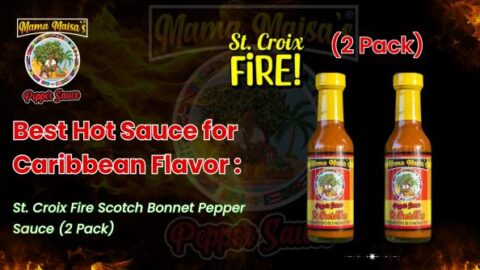
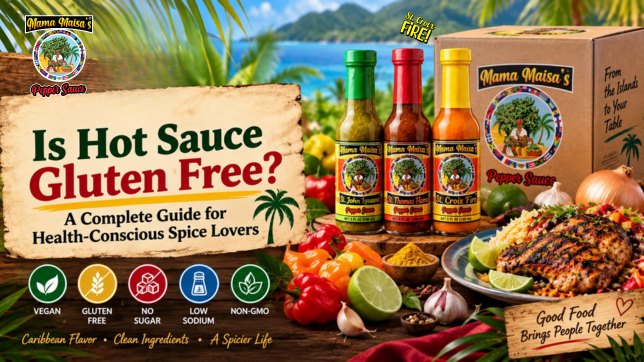
Mama Maisa’s St. Croix Fire is positioned as a vegan, gluten-free hot sauce made with Scotch Bonnet peppers, curry, garlic, lime, mustard, onion, and island-inspired spices.
For shoppers specifically seeking a Vegan hot sauce, that combination makes St. Croix Fire worth considering as a Caribbean-inspired option.
What About Sugar-Free and Low-Sodium Hot Sauce?
Sugar-free and low-sodium describe different characteristics, and neither term automatically means a sauce is gluten-free.
Sugar-free
A sugar free hot sauce is formulated without sugar according to the applicable labeling requirements. But “sugar-free,” “no added sugar,” and “naturally low in sugar” are not interchangeable descriptions.
Low sodium
A low sodium hot sauce can appeal to shoppers who are intentionally comparing sodium levels, but “low sodium” is not the same thing as “reduced sodium.”
The practical lesson is to evaluate the product’s actual nutrition information and labeling rather than assuming one desirable attribute guarantees another.
St. Croix Fire is positioned in the supplied product information as no sugar and low sodium, alongside its vegan and gluten-free positioning.
What Is a Clean Ingredient Hot Sauce?
“Clean ingredient” and “clean label” are consumer-facing descriptions rather than universal certifications.
When shoppers talk about a clean ingredient hot sauce, they often mean they prefer:
- A recognizable ingredient list
- Straightforward pepper and spice ingredients
- No unnecessary fillers
- No artificial ingredients
- Transparent product information
- A flavor profile built from recognizable culinary ingredients
It’s better to treat “clean label” as a description of ingredient preferences than as a guarantee of a particular health outcome.
St. Croix Fire takes a flavor-first approach built around Scotch Bonnet peppers, curry, garlic, lime, mustard, onion, and island-inspired spices.
What Does Scotch Bonnet Pepper Sauce Taste Like?
Scotch Bonnet peppers are known for substantial heat, but their appeal isn’t simply intensity.
They can bring a distinctive fruity pepper character that works particularly well with bright, savory, and aromatic ingredients.
St. Croix Fire layers that pepper character with:
- Mustard tang
- Curry warmth
- Garlic
- Lime brightness
- Onion
- Island-inspired spices
- Sweet-heat character
- Lingering Caribbean-inspired warmth
The finished sauce shouldn’t be described by an invented Scoville number. Heat perception varies with the recipe, serving size, and individual tolerance, and the supplied product information does not provide a verified Scoville rating for the finished sauce.
If you’re exploring Scotch bonnet pepper sauce, the important distinction is flavor as well as heat. Scotch Bonnet can bring a more tropical, aromatic personality than simply adding generic chili heat.
Why Is St. Croix Fire Different From a Basic Hot Sauce?
Many everyday hot sauces are designed primarily around acidity and chili heat. St. Croix Fire takes a broader Caribbean-inspired flavor approach.
| Feature | Traditional Hot Sauce | Gluten-Free Hot Sauce | St. Croix Fire |
|---|---|---|---|
| Gluten-free positioning | Varies | Yes, when properly formulated/labeled | Yes, based on supplied product information |
| Vegan | Varies | Varies | Yes |
| Sugar-free / no sugar | Varies | Varies | Yes |
| Low sodium | Varies | Varies | Yes |
| Scotch Bonnet | Varies | Varies | Yes |
| Caribbean-inspired flavor | Varies | Varies | Yes |
| Curry & mustard profile | Varies | Varies | Yes |
The point isn’t that one style is universally better. It’s that St. Croix Fire gives shoppers looking for a Caribbean hot sauce a different flavor direction.
The combination of pepper, mustard, curry, garlic, lime, onion, and spices gives it several layers to work with rather than relying on heat alone.
What Are the Best Gluten Free Hot Sauce Brands?
There isn’t one objectively best gluten free hot sauce for every shopper.
The better way to compare gluten free hot sauce brands is to look at what matters to you:
- Ingredient transparency
- Gluten-free labeling
- Allergen information
- Pepper variety
- Heat level
- Sodium
- Sugar
- Vegan suitability
- Flavor profile
- Serving versatility
- Manufacturer transparency
Someone looking for a mild vinegar sauce may want something very different from a Scotch Bonnet enthusiast.
For shoppers interested in comparing the Mama Maisa’s range, the Hot sauce brands collection provides a natural starting point.
St. Croix Fire is one option for consumers specifically looking for a Scotch Bonnet-based, Caribbean-inspired sauce with vegan, gluten-free, no-sugar, low-sodium, and non-GMO positioning.
How Should You Choose the Best Gluten Free Hot Sauce?
Before buying, run through this checklist:
| What to Compare | Question to Ask |
|---|---|
| Gluten | Does the product have appropriate gluten-free labeling or clear ingredient information? |
| Ingredients | Can you understand what is actually in the sauce? |
| Pepper | Which pepper creates the heat and flavor? |
| Heat | Does the intensity suit your palate? |
| Sodium | Does the product fit your sodium preferences? |
| Sugar | Does it contain sugar, or is it positioned as no sugar? |
| Vegan | Does the recipe fit your plant-based requirements? |
| Flavor | Is it vinegar-forward, smoky, fruity, savory, curry-based, or Caribbean-inspired? |
| Versatility | Can you use it on proteins, vegetables, bowls, sandwiches, or marinades? |
| Transparency | Can you find clear information from the manufacturer? |
| Size | Is a single bottle, multipack, or larger quantity more practical? |
If you’re buying for a household with different spice preferences, versatility can be especially useful. A sauce that works as both a finishing condiment and a marinade is easier to incorporate into regular meals.
How Does Caribbean Flavor Influence Hot Sauce?
Caribbean-inspired pepper sauces often build flavor through contrast: heat balanced by acidity, aromatics, spices, and savory ingredients.
In St. Croix Fire, that profile comes from the interaction of:
- Scotch Bonnet peppers
- Mustard
- Curry
- Garlic
- Lime
- Onion
- Island-inspired spices
The result is a condiment designed to contribute more than heat.
That makes it especially useful with grilled foods, seafood, rice dishes, vegetables, sandwiches, and plant-based meals where a small amount of sauce can change the character of the entire dish.
Can Gluten-Free Hot Sauce Still Have Big Flavor?
Absolutely. Gluten-free does not mean flavor-free.
Flavor comes from the ingredients and how they work together. Peppers provide heat and character; citrus adds brightness; garlic and onion contribute aromatics; mustard adds tang; curry and spices add warmth.
St. Croix Fire is a useful example because its flavor direction is built around those components rather than depending on gluten-containing ingredients for complexity.
For shoppers who want a vegan gluten free hot sauce, the important question isn’t simply whether gluten has been removed. It’s whether the sauce still has a flavor profile worth putting on dinner.
Real-Life Ways to Use St. Croix Fire
Grilled chicken
Use St. Croix Fire as a finishing sauce or incorporate it into a marinade. The Scotch Bonnet, mustard, garlic, and lime notes can add heat and brightness to grilled chicken.
Seafood
Scotch Bonnet, lime, garlic, mustard, and curry make an interesting match for fish and shrimp. Start with a small amount so the sauce complements rather than overwhelms the seafood.
Roasted vegetables
A few drops over roasted vegetables can add acidity, spice, and aromatic complexity without requiring a complicated sauce.
Rice bowls
Try it with rice, beans, vegetables, and your preferred protein. The Caribbean-inspired flavor can give a familiar grain bowl a completely different direction.
Sandwiches and wraps
A small amount can bring heat and tang to burgers, sandwiches, wraps, and plant-based fillings.
Plant-based meals
Because St. Croix Fire is positioned as vegan, it can be used with tofu, roasted vegetables, grain bowls, beans, and plant-based proteins.
Is St. Croix Fire a Good Choice for Health-Conscious Spice Lovers?
It can be a relevant option for consumers whose personal food preferences include the characteristics supplied for the product: vegan, gluten-free, no sugar, low sodium, non-GMO, and all-natural positioning.
But “healthiest” is not a universal product ranking.
The best choice depends on the individual. Someone may prioritize sodium, another person may focus on sugar, another on vegan ingredients, and another may care most about a short ingredient list or a particular pepper.
That’s why it makes more sense to describe St. Croix Fire according to its specific characteristics rather than call it universally healthy.
Is Scotch Bonnet Pepper Sauce Too Hot for Everyday Use?
That depends on your heat tolerance.
Scotch Bonnet peppers are substantially hot, so if you’re new to them, start small.
Try these approaches:
- Start with a few drops.
- Use it as a finishing sauce.
- Mix it into a marinade.
- Add it to a larger dish.
- Pair it with rice, beans, vegetables, or grains.
- Balance heat with acidic, creamy, savory, or naturally sweet foods.
- Taste before adding more.
This lets you control the heat while still benefiting from the sauce’s flavor.
What Foods Pair Best With Caribbean Hot Sauce?
Caribbean-inspired pepper sauce works particularly well with foods that can carry bold seasoning.
Try St. Croix Fire with:
- Chicken
- Shrimp
- Fish
- Seafood
- Steak
- Burgers
- Tacos
- Rice bowls
- Beans
- Roasted vegetables
- Eggs
- Sandwiches
- Wraps
- Plant-based proteins
Rich grilled foods can stand up to the pepper’s heat, while lime and mustard can brighten seafood and vegetables. Rice and beans provide a neutral base that lets the sauce’s spices become more noticeable.
How Can You Use Hot Sauce Without Overpowering Food?
The easiest rule is add gradually.
Start with a few drops, taste the food, and decide whether it needs more. Hot sauce doesn’t always need to be the dominant flavor.
You can also:
- Stir it into a marinade.
- Mix it into a larger sauce.
- Add it after cooking.
- Pair it with fatty or creamy ingredients.
- Combine it with acidic ingredients.
- Use it as a finishing condiment.
This approach is particularly helpful with Scotch Bonnet sauces because you can control both heat and flavor intensity.
What Should You Look for on a Hot Sauce Label?
Before buying a bottle, check:
- Ingredient list
- Gluten-free statement
- Allergen information
- Sugar information
- Sodium information
- Vegan suitability
- Pepper variety
- Serving size
- Manufacturer information
- Storage information, when applicable
Remember that gluten-free, vegan, sugar-free, and low-sodium are separate characteristics. One label claim shouldn’t be treated as proof of another.
For U.S. consumers, the FDA’s definition of “gluten-free” provides an important baseline: a food using that claim must meet the applicable regulatory criteria, including the less-than-20-ppm gluten threshold.
A Few Practical Buying Options
Once you’ve identified what you want from a sauce, purchasing format becomes a practical consideration.
If you know St. Croix Fire is going to become a regular table condiment, a Low sodium hot sauce multipack can make more sense than repeatedly ordering individual bottles.
For households that want to try different quantities, you can also explore Popular hot sauce bundle options.
For gifting, a Hot sauce gift set can turn a distinctive condiment into a food-focused present.
And if you’re interested in larger quantities for a restaurant, food business, catering operation, or retail use, Mama Maisa’s provides information for Wholesale Hot Sauce purchasing.
FAQ
1. Is hot sauce gluten free?
Many hot sauces are gluten-free, but not all of them are. A recipe based on peppers, vinegar, spices, garlic, onion, and citrus may contain no gluten-containing ingredients, but formulations vary. Check the ingredient list and product labeling. In the U.S., an FDA-regulated “gluten-free” claim must meet specific requirements, including less than 20 ppm gluten.
2. Is all hot sauce gluten free?
No. Hot sauce isn’t automatically gluten-free simply because peppers are naturally gluten-free. Additional ingredients such as certain soy sauces, malt-derived ingredients, seasoning blends, or other processed components can require closer inspection. Manufacturing and cross-contact considerations may also matter.
3. What makes hot sauce gluten free?
A gluten-free hot sauce must meet the applicable gluten-free labeling requirements. In the U.S., FDA rules address gluten-containing grains and ingredients derived from them and require any unavoidable gluten in a product carrying the claim to be below 20 ppm.
4. Can people with gluten restrictions eat hot sauce?
They may be able to, depending on the specific product and their dietary requirements. Consumers should read the ingredient list, check gluten-free labeling when available, consider cross-contact, and contact the manufacturer when information is unclear. Individual medical dietary requirements should take priority over general assumptions about a sauce.
5. Is Scotch Bonnet pepper sauce gluten free?
Scotch Bonnet peppers themselves are naturally gluten-free, but the finished sauce must be evaluated as a whole. St. Croix Fire is positioned in the supplied product information as gluten-free and combines Scotch Bonnet peppers with mustard, curry, garlic, lime, onion, and island-inspired spices.
6. Is hot sauce vegan and gluten free?
Some hot sauces are both vegan and gluten-free, but the two claims are separate. Vegan status concerns animal-derived ingredients, while gluten-free status concerns gluten and applicable labeling requirements. Check both characteristics independently instead of assuming one guarantees the other.
7. Is sugar-free hot sauce gluten free?
Not necessarily. A sauce can be sugar-free while still containing an ingredient that isn’t compatible with a gluten-free diet. Sugar content and gluten status should be checked separately. St. Croix Fire is positioned as both no sugar and gluten-free according to the supplied product information.
8. What is the best gluten free hot sauce?
The best gluten-free hot sauce depends on your priorities. Consider ingredients, gluten-free labeling, pepper variety, heat, sodium, sugar, vegan suitability, flavor, and versatility. Someone who loves Caribbean flavors and Scotch Bonnet peppers may prefer a very different sauce from someone seeking a mild vinegar-forward condiment.
9. What should I look for in a gluten-free hot sauce?
Start with the ingredient list and the product’s gluten-free labeling. Then consider allergen information, sodium, sugar, pepper type, vegan suitability, serving size, and manufacturer transparency. If you have strict dietary requirements and an ingredient or manufacturing detail is unclear, contact the manufacturer before purchasing.
10. Is low sodium hot sauce healthier?
“Low sodium” and “healthier” aren’t interchangeable. A low-sodium product may fit a person’s dietary priorities, but whether it is the better choice depends on the individual’s overall diet and needs. Compare actual nutrition information rather than treating one product characteristic as a universal health ranking.
Final Verdict — Is Hot Sauce Gluten Free?
Many hot sauces are gluten-free, but not every hot sauce is automatically gluten-free.
The safest shopping habit is to check the actual product’s ingredients, labeling, allergen information, and relevant manufacturer information. In the U.S., an FDA-regulated “gluten-free” claim has a defined standard, including less than 20 ppm gluten.
Gluten-free also isn’t the same as allergen-free. Vegan, sugar-free, no-added-sugar, and low-sodium are separate considerations that should be evaluated independently.
For people who want more than simple heat, Scotch Bonnet pepper sauce offers another dimension. St. Croix Fire combines Scotch Bonnet peppers with mustard, curry, garlic, lime, onion, and island-inspired spices for a Caribbean-inspired flavor profile.
Based on the supplied product information, St. Croix Fire is positioned as vegan, gluten-free, no sugar, low sodium, non-GMO, and all-natural, making it an option worth exploring for shoppers whose dietary preferences align with those characteristics.
If you’re ready to put Caribbean-inspired Scotch Bonnet flavor on grilled foods, seafood, vegetables, rice bowls, sandwiches, and plant-based meals, Best hot sauces is a natural place to continue exploring Mama Maisa’s options.
👉 Shop authentic Caribbean heat here: Mama Maisa’s Pepper Sauce
👉 Mama Maisa’s Contact: Hot pepper sauce

- Mustard Hot Sauce: The Bold, Tangy Twist Your Kitchen Is Missing - September 15, 2026
- Is Hot Sauce Gluten Free? A Complete Guide for Health-Conscious Spice Lovers - September 10, 2026
- Scotch Bonnet Pepper Hot Sauce: The Complete Guide to Flavor, Heat & Uses - September 8, 2026