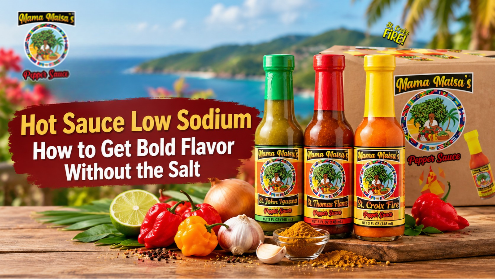
Looking for hot sauce low sodium does not mean settling for a sauce that tastes flat or forgettable. A well-balanced pepper sauce can create plenty of impact through heat, acidity, aromatics, spices, citrus, and pepper character, even when sodium is not doing all the flavor work.
That matters for shoppers in the United States who are comparing condiments, reading Nutrition Facts labels, or simply trying to make more thoughtful choices about what goes onto everyday meals. Hot sauce is often used in small amounts, but sodium content can vary considerably from one product to another.
The key is to look beyond the words on the front of the bottle. Check the serving size, sodium per serving, ingredient list, and overall flavor profile. Then consider what gives the sauce its character.
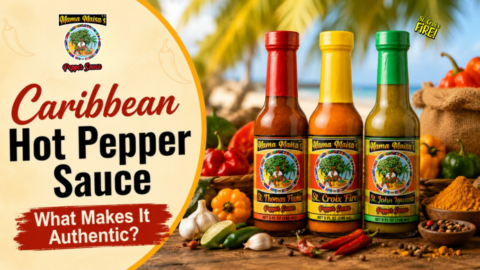
Caribbean-inspired pepper sauces are particularly interesting because Scotch bonnet peppers, curry-style spices, mustard, garlic, onion, and lime can create a layered combination of heat, tang, warmth, aroma, and brightness. That flavor-first approach is at the heart of sauces such as Mama Maisa’s St. Croix Fire.
What Is a Low Sodium Hot Sauce?
A low sodium hot sauce is a pepper sauce that fits a consumer’s lower-sodium preferences based on its Nutrition Facts label and applicable nutritional standards.
The important point is that there is no reason to judge a sauce solely by its name or marketing language. Compare the sodium per serving, check the serving size, and look at the complete ingredient list.
Sodium levels can vary because recipes use different amounts of salt and may contain other sodium-containing ingredients. Mustard, for example, can contribute to a recipe’s overall sodium content, depending on the formulation.
When comparing sauces, look for:
- Serving size
- Sodium per serving
- Ingredient order
- Added sugar information
- Pepper varieties
- Dietary characteristics
- Overall flavor profile
A simple label comparison can tell you much more than assuming every hot sauce has roughly the same sodium content.
Is Hot Sauce High in Sodium?
Hot sauce can be high or relatively low in sodium depending on the product. There is no single sodium level that applies to every hot sauce because recipes, serving sizes, and ingredients vary.
If sodium is important to you, compare products using their Nutrition Facts panels rather than assuming that a particular type of pepper sauce automatically contains more or less sodium.
Three things deserve particular attention:
- Serving size: Compare equivalent serving sizes when possible.
- Recipe formulation: Different brands use different combinations of salt, vinegar, mustard, peppers, spices, and other ingredients.
- Sodium per serving: This is the number that lets you compare products directly.
If you are intentionally following a reduced sodium diet, the Nutrition Facts label should be your starting point. Anyone with a medically prescribed sodium restriction should also follow guidance from their qualified healthcare professional.
How Can Hot Sauce Stay Flavorful With Less Salt?
Salt is only one part of the flavor equation. A flavorful low sodium spicy sauce can use multiple sensory elements to create complexity.
Scotch Bonnet Peppers
Scotch bonnet peppers are known for their distinctive heat and fruity character. They bring more than simply spiciness to a sauce; their aroma and recognizable pepper personality can make the flavor immediately noticeable.
That makes them useful in a sauce designed around bold flavor rather than relying entirely on salt.
Curry
Curry-style spices contribute warmth, aroma, and depth. Different spice combinations can create layers that remain noticeable even when the sauce is not dominated by salt.
In a Caribbean-inspired recipe, curry-style warmth can also complement the fruity heat of Scotch bonnet peppers.
Mustard
Mustard contributes tang and sharpness. That contrast can make a pepper sauce taste more lively and complex.
Because mustard has its own distinctive flavor, it can play a role in building character alongside peppers and spices.
Garlic and Onion
Garlic and onion provide aromatic and savory depth. They can help round out the sharper elements of peppers and citrus while giving the sauce a fuller flavor profile.
Lime and Acidity
Acidity can brighten food. Lime brings a citrusy quality that can make peppers, aromatics, and spices feel more vibrant on the palate.
This is particularly useful when building a sauce where flavor comes from several components rather than relying heavily on salt.
Spice Blends
Layered spices can create warmth and aroma that make a sauce more interesting from the first taste through the finish. The goal is not simply more heat; it is balance between heat, acidity, aroma, spice, and savory character.
What Makes a Low Sodium Hot Sauce Taste Bold?
A bold sauce does not need to taste like salt with peppers added. Flavor can come from several ingredients working together.
| Flavor Element | What It Contributes | Why It Matters |
|---|---|---|
| Scotch bonnet | Heat + fruitiness | Creates distinctive pepper character |
| Lime | Bright acidity | Lifts other flavors |
| Mustard | Tang + sharpness | Adds complexity |
| Garlic | Savory aroma | Builds depth |
| Onion | Sweet-savory base | Rounds the flavor |
| Curry spices | Warmth + aroma | Creates Caribbean-inspired character |
This is why shoppers looking for a low sodium hot sauce without losing flavor should consider the whole ingredient profile rather than focusing on sodium alone.
For readers exploring different Scotch bonnet pepper sauce options, the pepper variety itself can be an important part of the flavor experience.
A Soft Mid-Article Choice
If you enjoy Caribbean-inspired heat, look beyond a sauce’s sodium number and consider whether its peppers, aromatics, spices, and acidity match the foods you actually eat. Flavor complexity can make a lower-sodium condiment much more useful in everyday cooking.
How to Choose a Low Sodium Hot Sauce in the USA
Shopping for lower-sodium condiments in the United States becomes easier when you use a consistent checklist.
1. Check the serving size
A small serving can make a sodium number look different from a product with a larger stated serving. Compare like with like.
2. Read sodium per serving
The Nutrition Facts panel gives you a concrete number to use when comparing products.
3. Compare similar products
Compare several sauces rather than judging one bottle in isolation.
4. Look beyond sodium
Flavor, ingredients, sugar content, pepper variety, and dietary preferences may all matter.
5. Check the ingredient list
Look for ingredients that contribute the flavor profile you want, such as peppers, citrus, garlic, onion, mustard, herbs, or spices.
6. Consider sugar content
If you are looking for a no-sugar sauce, check the product information rather than assuming a spicy sauce is sugar-free.
7. Check dietary preferences
Vegan, gluten-free, and other dietary characteristics can be important depending on your needs.
8. Look for flavor complexity
A sauce with several complementary flavor components may offer more versatility than one focused only on heat.
9. Consider intended use
Think about whether you want a sauce for breakfast, grilling, seafood, vegetables, sandwiches, marinades, or meal prep.
10. Choose a sauce you actually enjoy
The most useful condiment is one you will reach for regularly.
When researching Hot sauce brands, use the same checklist for every product so your comparison is based on information rather than packaging claims alone.
What Ingredients Should You Look for in a Flavorful Low Sodium Sauce?
There is no single ingredient that automatically makes a sauce a good lower-sodium choice. Instead, consider how the ingredients work together.
Peppers provide heat, aroma, and personality.
Citrus such as lime contributes brightness and acidity.
Vinegar or other acidic ingredients, where used, can add tang and lift.
Garlic brings aromatic depth.
Onion can provide a sweet-savory foundation.
Mustard contributes sharpness and tang.
Curry spices add warmth and aromatic complexity.
Herbs and spice blends can add additional layers without making the sauce dependent on one flavor.
For health-conscious shoppers, the ingredient list is especially useful alongside the Nutrition Facts panel. A sauce can be marketed around a particular characteristic, but the label provides the practical information needed for comparison.
Can Caribbean Hot Sauce Be Low Sodium and Still Taste Bold?
Yes, a Caribbean-inspired sauce can be designed around a complex flavor profile rather than relying solely on salt. Scotch bonnet peppers, aromatics, citrus, mustard, curry-style spices, and sweet-tangy contrasts can all contribute to intensity.
That combination is part of what makes a low sodium Caribbean sauce interesting. The flavor comes from several directions at once: heat from peppers, brightness from lime, tang from mustard, warmth from spices, and savory depth from garlic and onion.
Mama Maisa’s St. Croix Fire follows this flavor direction. According to the supplied product information, it combines Scotch bonnet peppers with curry, garlic, lime, mustard, onion, and island-inspired spices. It is also positioned as vegan, no sugar, low sodium, non-GMO, gluten-free, all-natural, and award-winning.
The exact sodium amount should always be confirmed on the product’s current Nutrition Facts label.
For shoppers interested in plant-forward options, Mama Maisa’s also offers a Vegan hot sauce category.
Why Scotch Bonnet Peppers Work So Well in Low Sodium Hot Sauce
Scotch bonnet peppers bring a distinctive combination of heat, fruity character, aroma, and Caribbean culinary associations.
That matters because heat itself can create a strong sensory impression. When a sauce also includes citrus, aromatics, mustard, and spices, the result can feel layered rather than simply salty or aggressively hot.
Scotch bonnet peppers are particularly well suited to Caribbean-inspired sauces because they naturally connect the condiment with the broader flavor traditions of the region.
The goal is not to make a sauce taste like pure pepper heat. The more interesting approach is to use the pepper as one component in a broader flavor structure.
Mama Maisa’s St. Croix Fire: Bold Caribbean Flavor Without Compromising Character
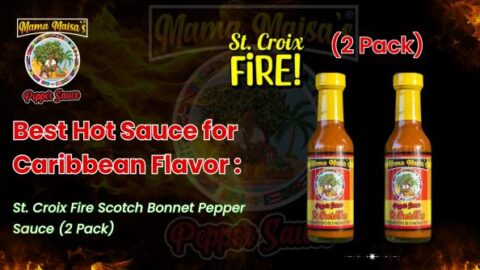
Mama Maisa’s St. Croix Fire Scotch Bonnet Pepper Sauce is a Caribbean-inspired pepper sauce built around a combination of Scotch bonnet peppers, curry, garlic, lime, mustard, onion, and island-inspired spices.
The flavor profile brings together bold pepper heat, curry-style warmth, tangy mustard, aromatic garlic, citrusy lime, gentle sweetness, and layered spice.
Its supplied product positioning includes:
- Vegan
- No sugar
- Low sodium
- Non-GMO
- Gluten-free
- All-natural
- Award-winning
The appeal is in the combination. Scotch bonnet peppers provide recognizable Caribbean heat, while mustard adds tang and sharpness. Garlic and onion contribute aromatic depth, and lime brings a brighter citrus character.
For shoppers exploring an Organic hot sauce or other specialty pepper sauce options, it is still important to distinguish a product’s flavor positioning from specific certifications. Do not assume “natural” means “certified organic” unless the product information specifically confirms that certification.
St. Croix Fire Flavor Profile
| Flavor Character | Description |
|---|---|
| Heat | Bold Scotch bonnet warmth |
| Sweetness | Gentle sweet notes |
| Acidity | Bright citrus character |
| Savory depth | Garlic and onion |
| Spice | Curry-style aromatic warmth |
| Finish | Layered Caribbean-inspired pepper flavor |
The sauce is designed to bring more than heat to a meal. That makes it suitable for everyday foods where a small amount of concentrated flavor can change the overall character of the dish.
How to Use Low Sodium Hot Sauce Without Adding More Salt
A flavorful pepper sauce can be incorporated into meals where you want heat and character without automatically reaching for additional salt.
Try it with:
- Eggs: Add a few drops to scrambled eggs, omelets, or breakfast bowls.
- Avocado toast: Pepper heat and citrusy brightness can complement creamy avocado.
- Grilled chicken: Use pepper sauce as a finishing condiment or part of a marinade.
- Seafood: Citrus and Scotch bonnet flavors can complement seafood dishes.
- Roasted vegetables: Add sauce after roasting for a bright, spicy finish.
- Rice bowls: Mix with vegetables, beans, or proteins for additional flavor.
- Tacos: Use it as a finishing sauce alongside your favorite fillings.
- Burgers: Add a small amount to create a spicy, tangy layer.
- Sandwiches: Use it as a condiment where mustard-like tang and pepper heat fit naturally.
- Beans: Add a little sauce to bring warmth and acidity.
- Plant-based proteins: Tofu and other plant-forward meals can benefit from bold sauces.
- Marinades: Combine pepper sauce with other suitable marinade ingredients to build flavor before grilling.
These applications illustrate an important principle: reducing reliance on salt does not mean removing flavor. Heat, acidity, aromatics, and spice can all contribute to a satisfying meal.
Low Sodium Hot Sauce vs Traditional Hot Sauce
Neither category is automatically right for every consumer. The useful approach is to compare the products and their labels.
| Factor | Lower-Sodium Option | Traditional/Other Hot Sauce |
|---|---|---|
| Sodium | May contain less sodium depending on recipe | Varies widely |
| Heat | Can still be intense | Can range from mild to very hot |
| Flavor | Depends on pepper, spice and acidity balance | Depends on formulation |
| Label reading | Important | Important |
| Best for | Consumers comparing sodium-conscious options | Broad range of preferences |
The term “reduced sodium hot sauce” can be useful when comparing products, but consumers should still check the actual Nutrition Facts panel and applicable labeling information.
Are Low Sodium Hot Sauces Healthy?
“Healthy” is context-dependent. A lower-sodium condiment may be useful for someone intentionally managing sodium intake, but that does not automatically make every low sodium sauce a universally healthy choice.
Consider the entire Nutrition Facts panel, serving size, ingredients, and how the condiment fits into your overall diet.
People have different nutritional needs. Anyone managing a medical condition or following a medically prescribed sodium restriction should use guidance from a qualified healthcare professional rather than relying on a product description alone.
That same principle applies when searching for a healthy low sodium hot sauce. Compare the product’s actual information instead of assuming a health outcome from a marketing phrase.
What About “Heart Healthy” Hot Sauce?
The phrase heart healthy hot sauce should be treated carefully. A hot sauce should not automatically be considered heart healthy simply because it contains less sodium.
Overall diet, serving size, sodium intake, other nutrients, and individual dietary needs all matter. Sodium is only one nutritional factor.
If you are comparing sauces with cardiovascular considerations in mind, review the complete Nutrition Facts panel and follow any dietary guidance provided by your healthcare professional.
How to Compare Low Sodium Hot Sauce Brands
When comparing low sodium hot sauce brands, use a consistent checklist:
- Sodium per serving
- Serving size
- Ingredient list
- Pepper variety
- Added sugar
- Dietary requirements
- Flavor profile
- Intended use
- Bottle or package size
- Brand transparency
You may find one sauce works better for breakfast while another is more suited to grilling or marinades. Someone who loves Caribbean flavors may prioritize Scotch bonnet peppers and citrus, while another shopper may care more about a mild heat level.
Mama Maisa’s is one brand shoppers can investigate if they are interested in Caribbean-inspired pepper sauce and Scotch bonnet flavor.
For people buying multiple bottles, a Popular hot sauce collection can also be worth exploring.
Why Flavor Complexity Matters More Than Just Heat
Heat and flavor are not the same thing.
A sauce can be extremely spicy but taste one-dimensional. Another sauce can combine moderate-to-bold heat with acidity, sweetness, aroma, savory depth, and spice, creating a more layered experience.
Think of the components separately:
- Heat: The physical sensation created by peppers.
- Flavor: What you actually taste from peppers and other ingredients.
- Aroma: The smells that contribute to the eating experience.
- Acidity: Brightness and tang.
- Sweetness: A gentle counterpoint to heat and acidity.
- Savory depth: Aromatic and umami-like qualities from ingredients such as garlic and onion.
- Spice: Warmth and aromatic complexity.
This distinction is especially useful when searching for a low sodium hot sauce without losing flavor.
Low Sodium Caribbean Sauce: A Flavor-First Approach
A low sodium Caribbean sauce can be built around the idea that boldness comes from combinations.
Scotch bonnet peppers bring recognizable heat and fruity character. Citrus adds brightness. Mustard introduces tang. Garlic and onion create aromatic depth, while curry-style spices add warmth.
That approach is reflected in St. Croix Fire, which combines these elements into a Caribbean-inspired pepper sauce. It can be used with grilled foods, seafood, vegetables, rice bowls, sandwiches, burgers, marinades, plant-based meals, and breakfast foods.
For shoppers searching for Best hot sauces, the useful question is not simply which sauce is “best.” Instead, ask which flavor profile, ingredient list, sodium level, and intended use match your preferences.
A Spicy sauce can also make a practical option for people who enjoy bold flavors and want to explore different ways to use pepper sauce.
Gifting and Multi-Bottle Options
Hot sauce can be an easy gift for people who enjoy grilling, cooking, Caribbean-inspired food, or experimenting with spicy condiments.
Multi-bottle options can be useful for:
- Housewarming gifts
- BBQ hosts
- Hot sauce enthusiasts
- Caribbean food lovers
- Holiday gifts
- Office food gifts
- Pantry stocking
For someone specifically searching for a Low sodium hot sauce, checking the current product label is still important so they can confirm the sodium information that applies to the product they are purchasing.
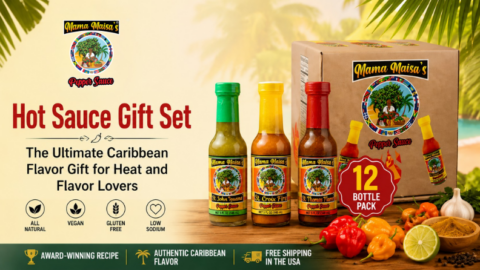
For larger gifting needs, a Hot sauce gift set can be another option to investigate.
Wholesale Hot Sauce for Businesses
Restaurants, retailers, specialty food stores, and foodservice buyers may also be interested in stocking Caribbean-inspired pepper sauce.
Businesses looking into Wholesale Hot Sauce can explore the wholesale option directly. Specific minimum orders, wholesale pricing, shipping arrangements, and retailer terms should be confirmed with Mama Maisa’s rather than assumed from consumer product information.
FAQ
1. What is a low sodium hot sauce?
A low sodium hot sauce is a pepper sauce that fits a consumer’s lower-sodium preferences based on its Nutrition Facts label and applicable nutritional standards. Because recipes and serving sizes vary, shoppers should compare sodium per serving rather than relying only on front-label marketing.
2. Is hot sauce high in sodium?
Some hot sauces can contain more sodium than others, but sodium levels vary significantly by recipe and serving size. Check the Nutrition Facts panel of each product to compare sodium per serving accurately.
3. How do you choose a low sodium hot sauce?
Start with the serving size and sodium per serving on the Nutrition Facts label. Then review the ingredient list, pepper variety, sugar content, dietary characteristics, and flavor profile. Comparing several products is more useful than assuming every hot sauce has similar sodium levels.
4. Can hot sauce be flavorful without a lot of salt?
Yes. Peppers, citrus, acidity, mustard, garlic, onion, curry-style spices, and other aromatics can contribute substantial flavor. Scotch bonnet peppers, in particular, can provide distinctive heat and fruity character that gives a sauce strong sensory impact.
5. What makes Scotch bonnet hot sauce different?
Scotch bonnet peppers are associated with distinctive heat, fruity character, aroma, and Caribbean culinary traditions. In a balanced sauce, they can work alongside citrus, aromatics, mustard, and spices to create a more complex flavor than heat alone.
6. Is Caribbean hot sauce usually spicy?
Caribbean hot sauces can range from mild to very spicy, depending on the pepper varieties and recipe. Scotch bonnet-based sauces are known for noticeable heat, but the overall experience also depends on acidity, spices, aromatics, sweetness, and other ingredients.
7. Is low sodium hot sauce suitable for everyone?
Not necessarily. Individual nutritional needs differ. People with medical conditions or medically prescribed sodium restrictions should follow guidance from their qualified healthcare professional and check the current Nutrition Facts label before choosing a condiment.
8. What should I look for on a hot sauce Nutrition Facts label?
Look at serving size and sodium per serving first. Then consider the full Nutrition Facts panel and ingredient list. If sugar, dietary ingredients, or other nutritional characteristics matter to you, evaluate those alongside sodium rather than focusing on a single number.
9. Is Mama Maisa’s St. Croix Fire vegan?
Yes. Based on the supplied product information, Mama Maisa’s St. Croix Fire is positioned as vegan. It is also positioned as no sugar, low sodium, non-GMO, gluten-free, all-natural, and award-winning.
10. What foods pair well with Scotch bonnet pepper sauce?
Scotch bonnet pepper sauce can pair with grilled chicken, seafood, roasted vegetables, rice bowls, tacos, burgers, sandwiches, eggs, beans, plant-based proteins, and marinades. The sauce can also be used with Caribbean-inspired dishes and everyday meals.
Final CTA
If you want a condiment that brings bold pepper character without relying on salt alone for its personality, Mama Maisa’s St. Croix Fire is worth exploring. Its Scotch bonnet peppers, curry-style warmth, mustard tang, garlic, lime, onion, and island-inspired spices create a layered Caribbean-inspired flavor profile.
For shoppers comparing hot sauce low sodium options, remember to check the current Nutrition Facts label for exact sodium information and choose according to your own dietary needs.
When you are ready to explore a Scotch bonnet-forward pepper sauce for eggs, grilling, seafood, vegetables, rice bowls, sandwiches, marinades, or everyday meals, discover Mama Maisa’s Pepper Sauce and find a flavor that fits your kitchen.
👉 Shop authentic Caribbean heat here: Mama Maisa’s Pepper Sauce
👉 Mama Maisa’s Contact: Hot pepper sauce

- Hot Sauce Gifts: Best Ideas for Spice Lovers This Holiday Season - October 15, 2026
- Is Hot Sauce Good for You? Health Benefits, Risks & What to Look For - October 12, 2026
- Types of Hot Sauce: A Complete Guide to Flavors, Heat Levels & Styles - October 8, 2026